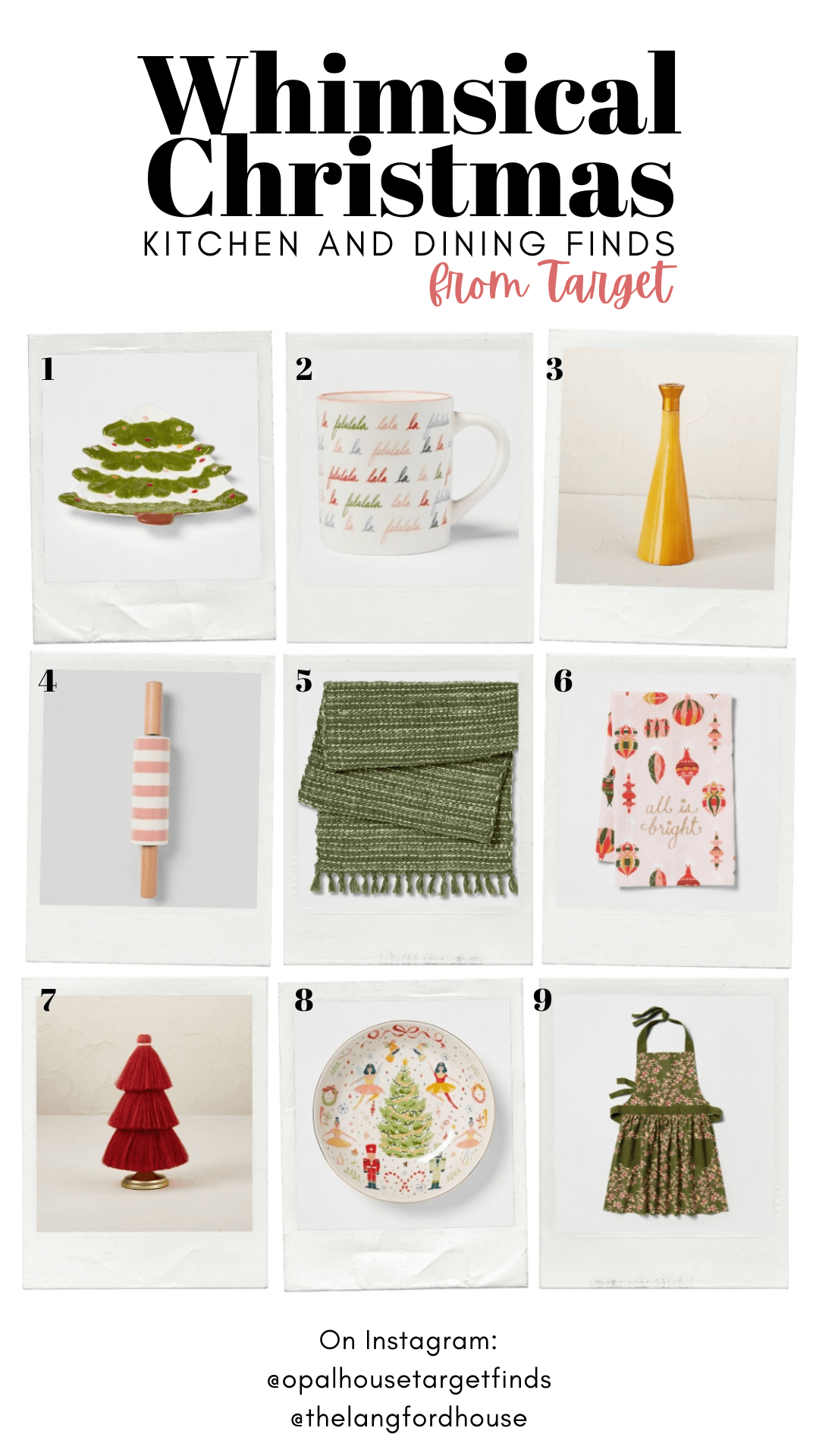
Just a fun mix of Christmas items from Target to add a little whimsy to your kitchen and dining (or elsewhere).
Here are the links:
Just a fun mix of Christmas items from Target to add a little whimsy to your kitchen and dining (or elsewhere).
Here are the links:
Fighting the urge to intro my first inspiration, or mood board, post here. And losing. Obviously. Anyway, here it is. Nothing spectacular. But it is cute. And I’ve found joy in creating random things like this lately. Also, anything surrounding Christmas just carries a little extra joy, right?!
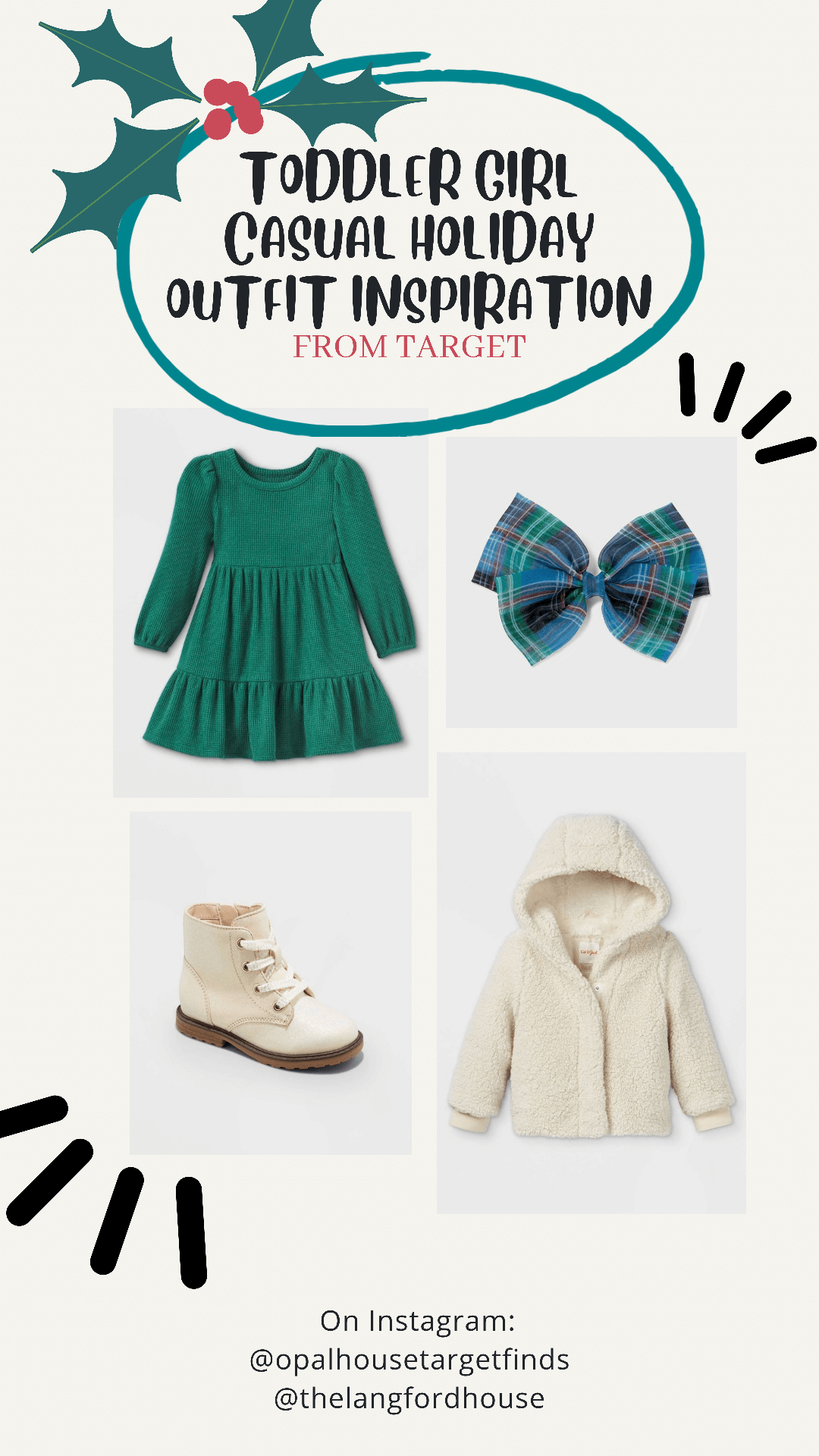
If bows didn’t make me feel 5 or 6, I’d wear this whole outfit. And you know, if they made it in my size. They don’t, though. But I do have a sweet toddler girlie that this would look precious on. ❤️💚
Here are the links:
Temporarily editing to add: This post has recently gained some traction, so I would love to point anyone interested in the direction of my other homeschool co-op posts, one on the Babylonian Empire and another on the Ancient Olmec Civilization. And I’m working on a couple more (Antarctica and the Sahara Desert) right now. Additionally, all of my posts, both short form and long form, related to homeschool can be found here.
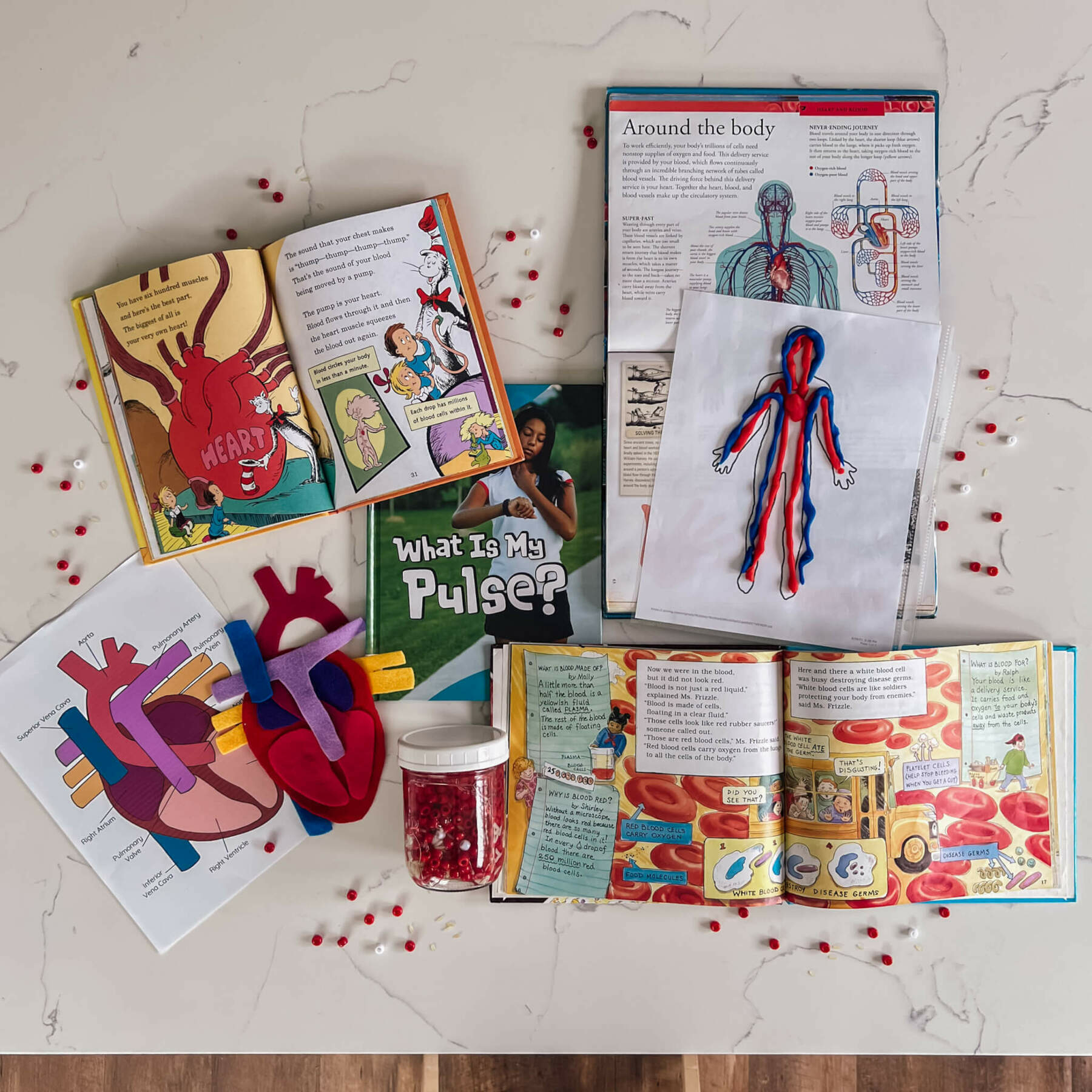
We (my 4, almost 5, year old and I…and sometimes my 2 year old) are part of a small homeschool co-op consisting of 7 kiddos (and some younger siblings) who are all currently 4 and 5 years old. We meet once a week and the moms take turns putting a themed lesson together. We’ve been doing this for three years now and have, obviously, tailored what we choose to teach based on the kids’ ages.
This year, we decided to group our themes together a little better. So, our first several lessons were loosely based around water (water cycle, storms, rainforest, ocean). And our second set of lessons were about the human body. For this set, I chose the heart and circulatory system as my theme. I was excited about doing it. But when I sat down to gather resources, it wasn’t quite as easy as I thought it might be. The kids always, always absorb more than we give them credit for, but I knew I still needed to carefully choose how much and what information to present to them. That was the most difficult part… Finding age-appropriate activities to match the content I wanted to give to them.
Pinterest is my best friend when it comes to planning these types of lessons. But I was coming up a little short on ideas for our age group. It took a little deeper digging than other unit studies. That’s part of why I decided to put all the information into this post. Maybe it’ll be helpful to someone and search time will be decreased. I do want to mention that it ended up being fun, and the kids seemed to enjoy it. So, if you’re on the fence about teaching a subject that may seem a little more complicated than others for 4 and 5 year olds, just go for it! I kind of accidentally did since I made a previous commitment to do so. But I’m glad I did! I also feel quite certain all of the activities and books we used could be tailored to older ages very easily. So if you’ve gotten this far and think what’s below may be too elementary, please dive a little deeper and have some fun figuring out how these ideas can work for you and your crew.
I tend to get wordy when I write, so I’m stopping all the intro now and giving you what you probably came here for anyway.
I split the lesson into 4 sections. So, I’m going to do that here as well.
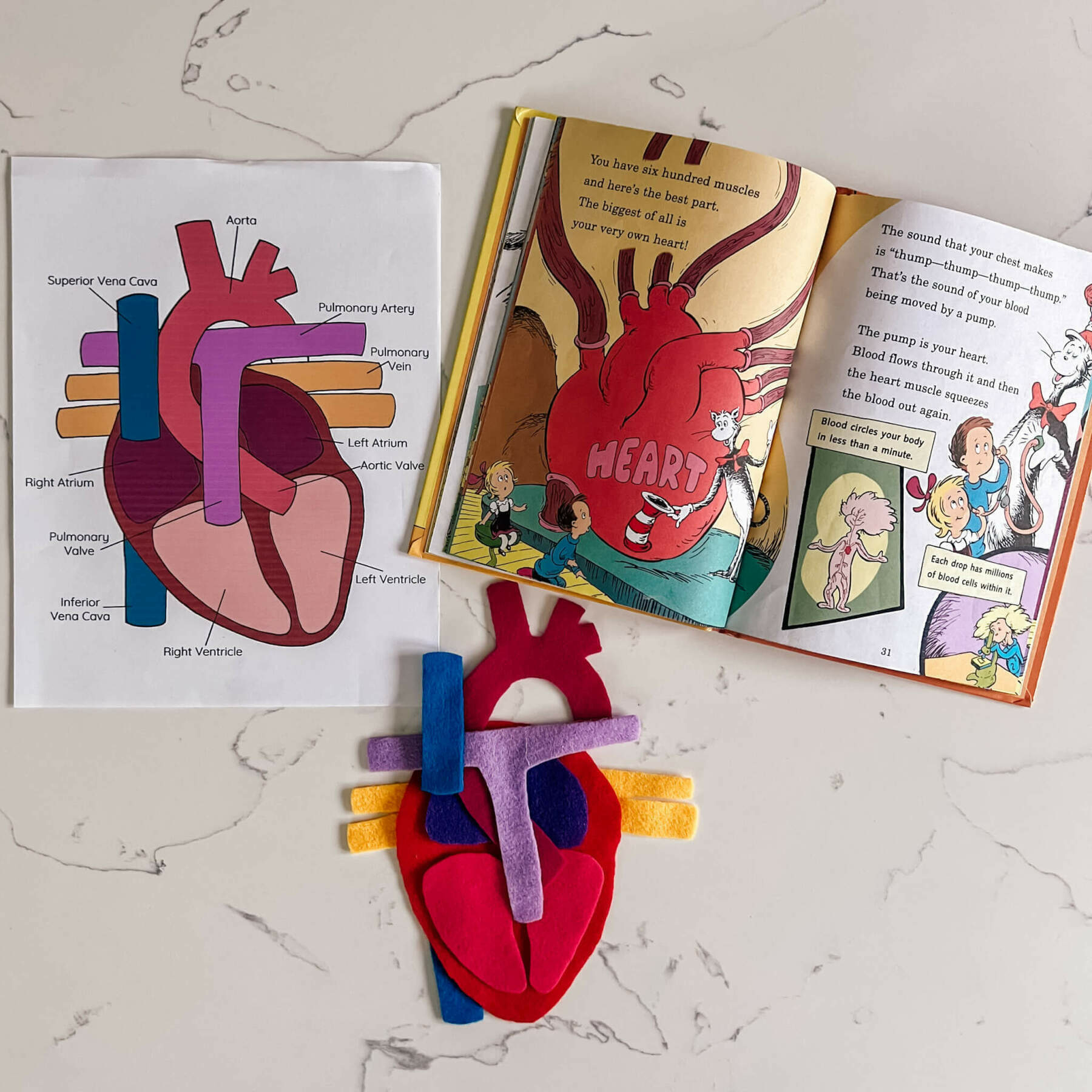
Corresponding book: I wanted to have a book for each section of my lesson. I knew I may or may not get to it mostly because of the various attention spans of a group of seven children. For this section, I was going to use “Inside Your Outside: All About the Human Body” from The Cat in the Hat’s Learning Library. I just marked the section on the heart since that was what was applicable. I didn’t end up using it, though. But I did want to make note of it because it’s a good resource. If we ever go through this study again at home, there’s a good probability I would use it then since I would have more time.
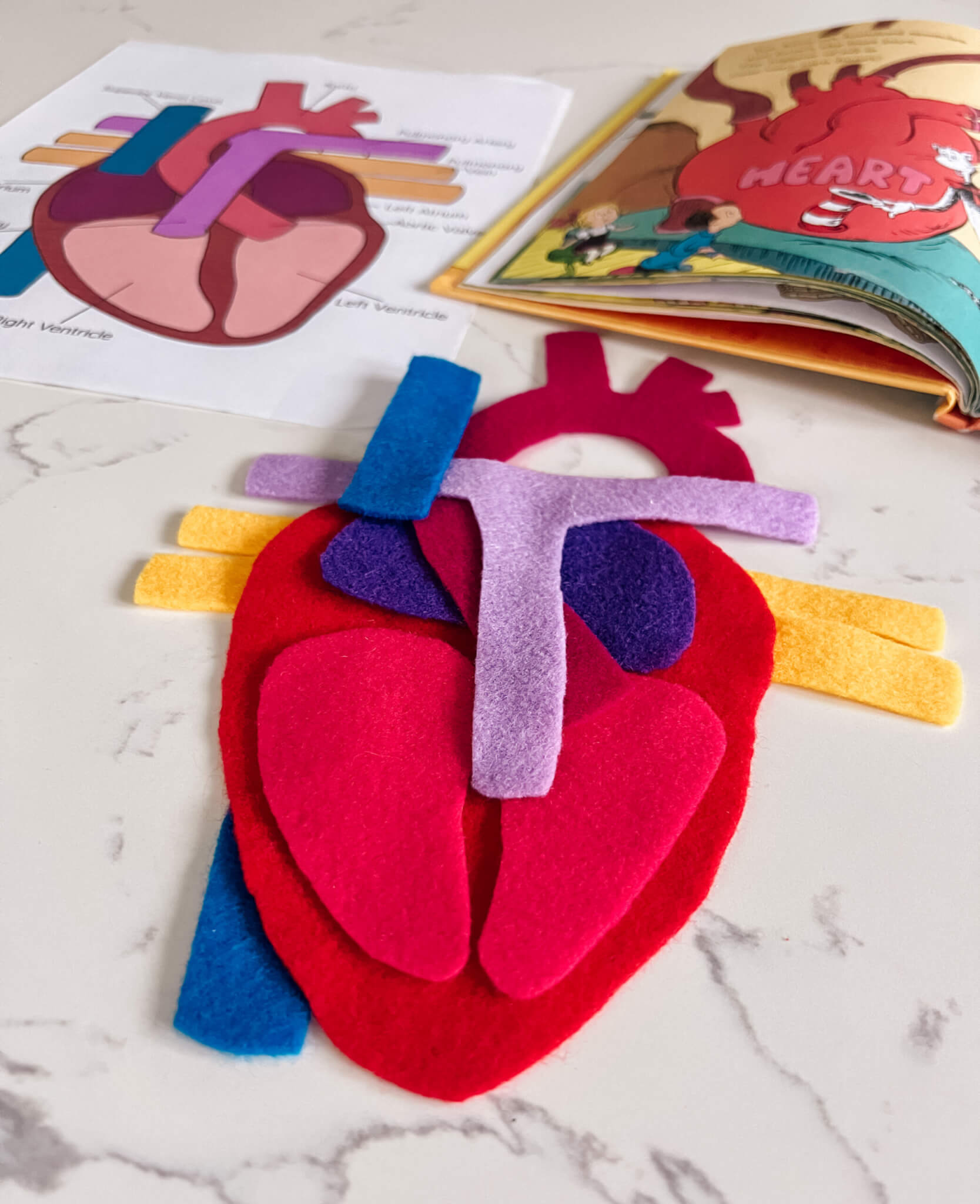
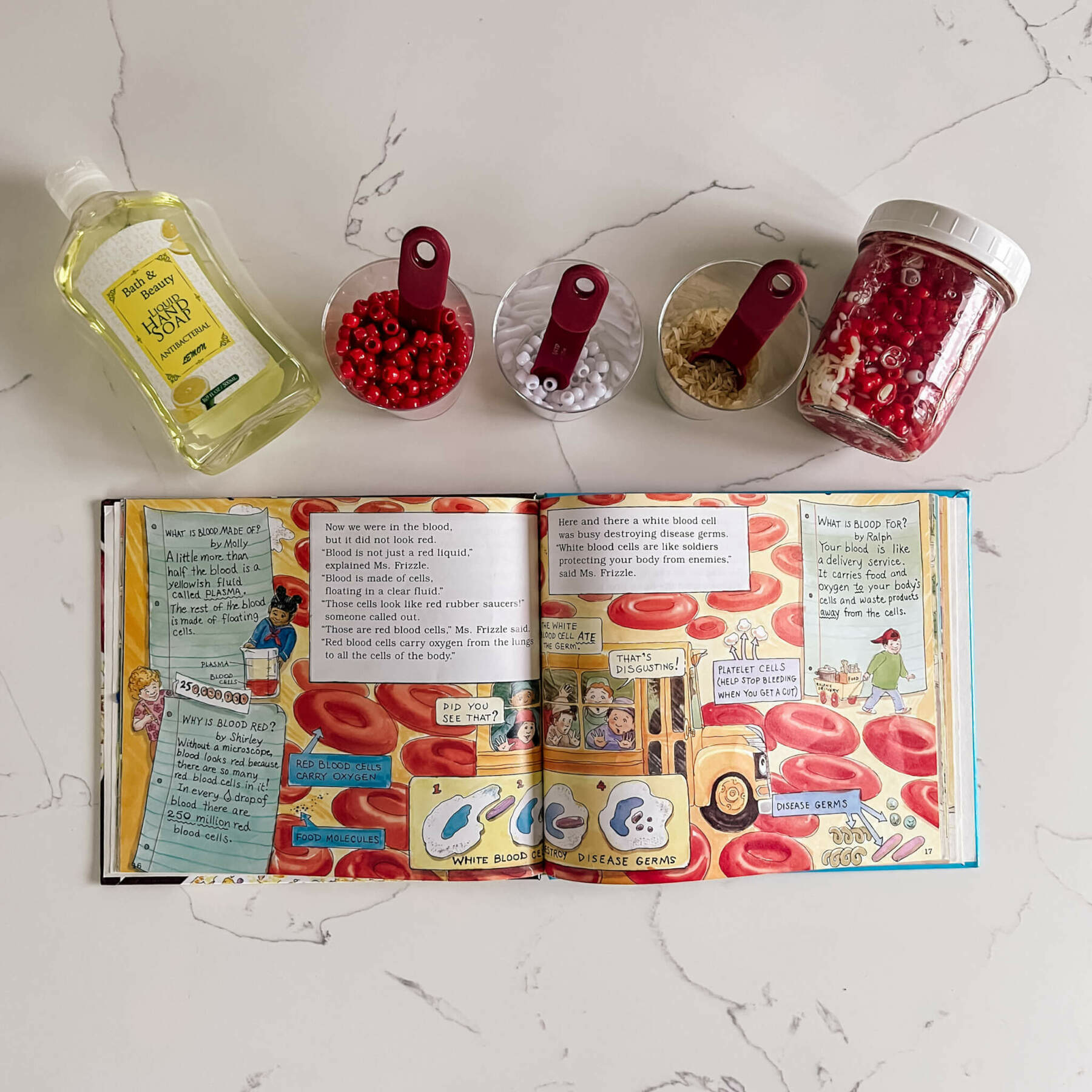
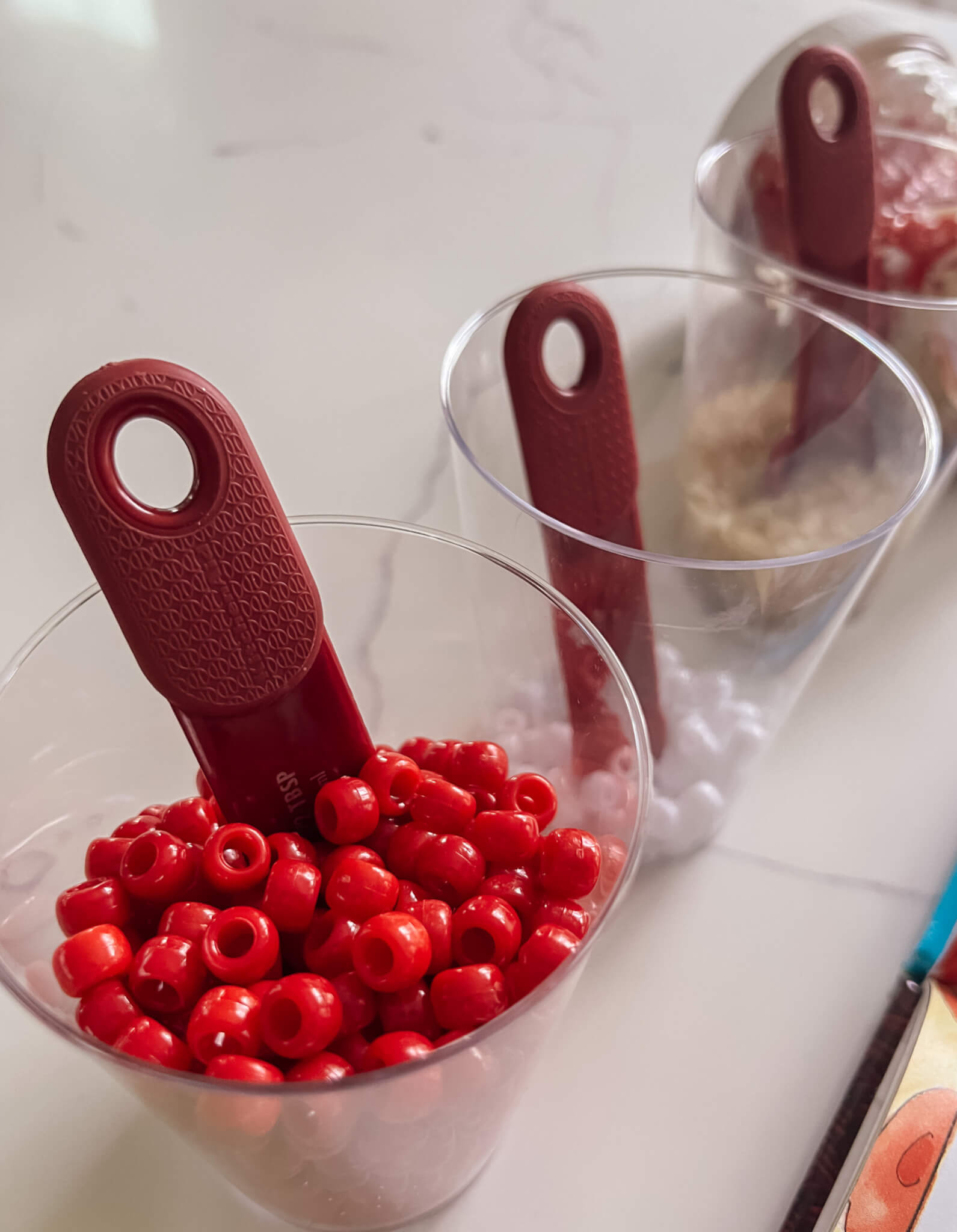
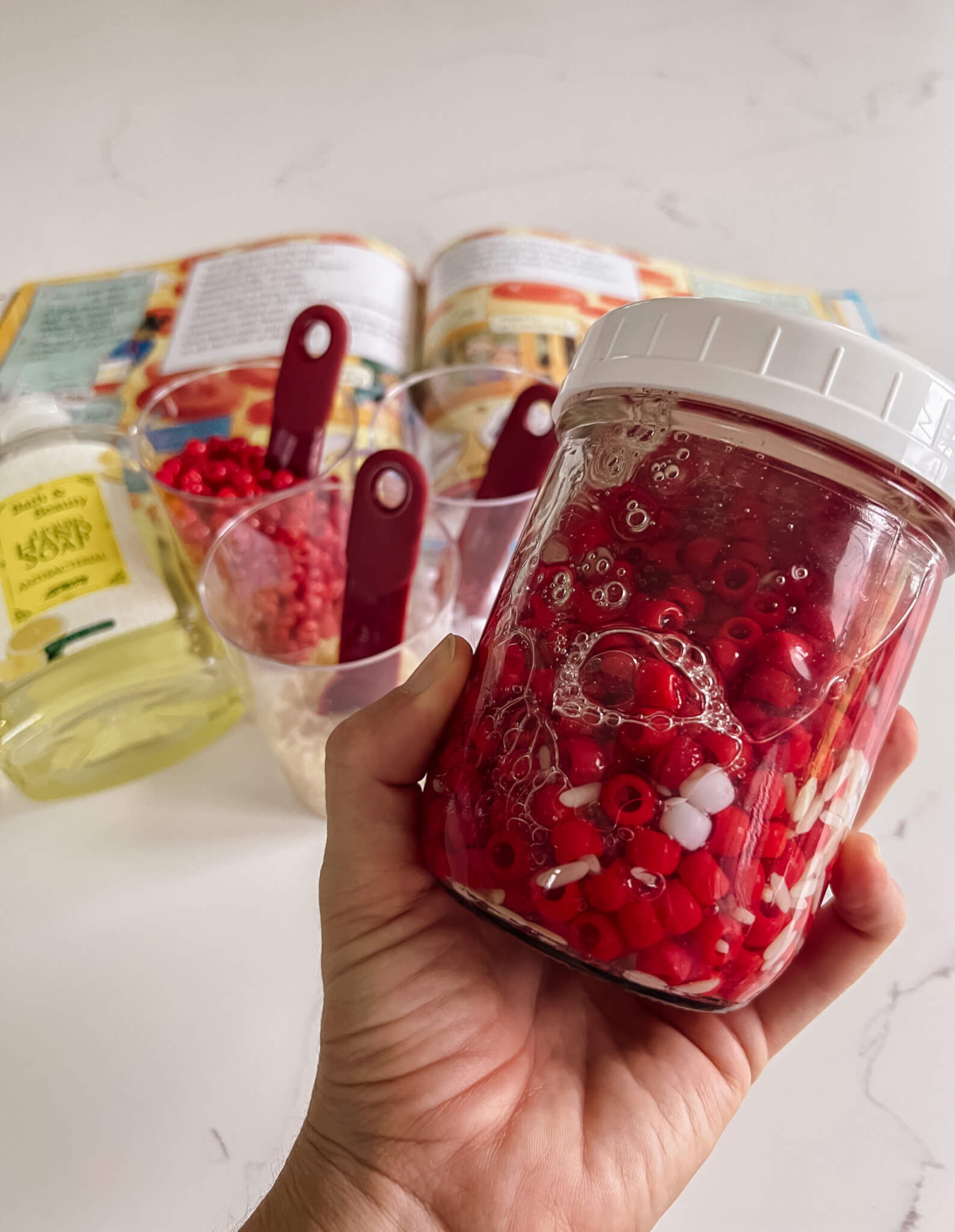
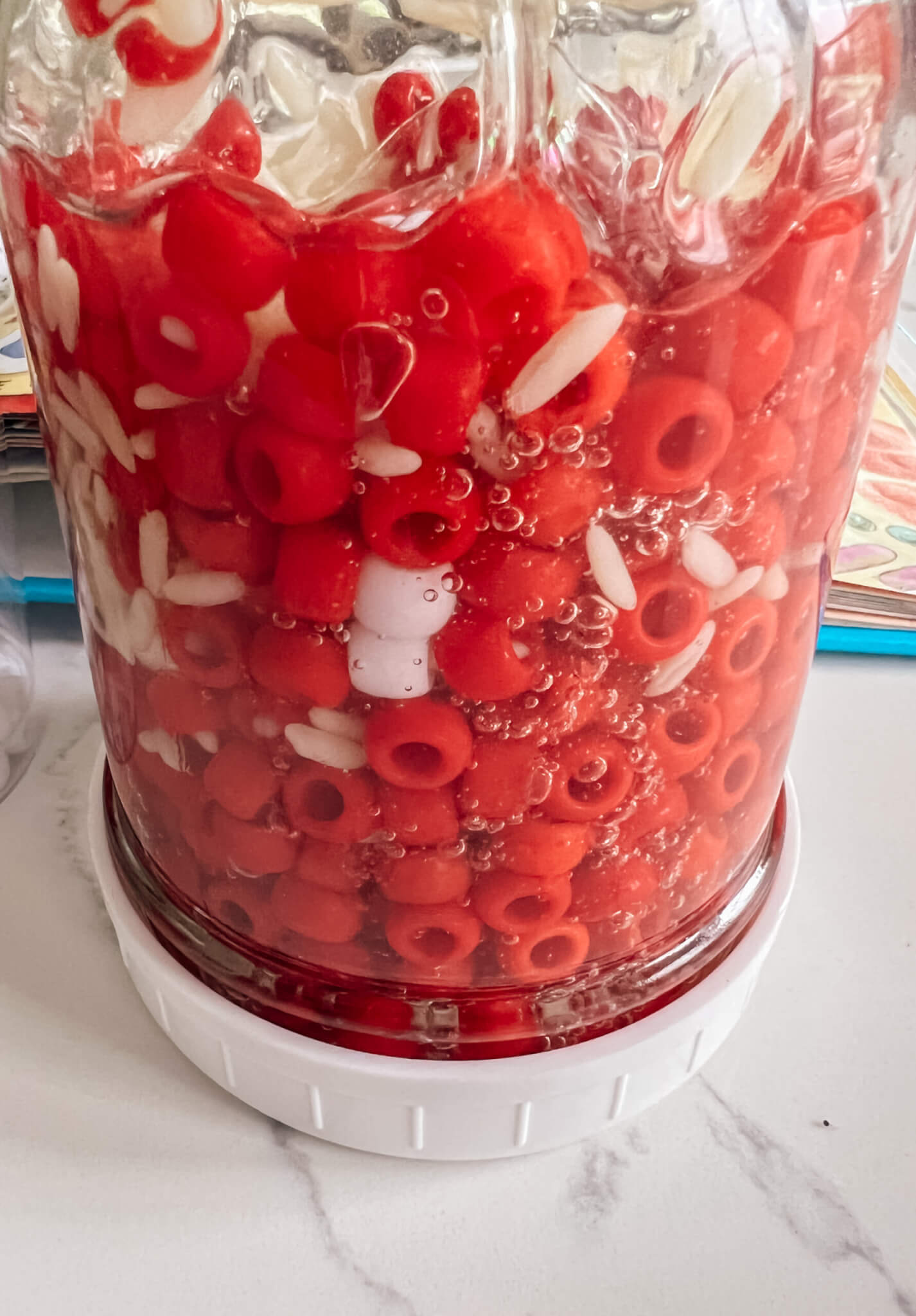
I introduced each “component” of the blood by name and put it on the table in front of them. Then, I poured the “plasma” into a glass jar leaving enough room to add the other parts. We started with “platelets.” I had a small measuring spoon that each child used to scoop some rice into our model of blood jar. After that, we added “white blood cells.” We talked about how we don’t have near as many white blood cells and reiterated their important job of fighting off germs. The kids used another small (to ensure we didn’t get too many) measuring spoon to add white blood cells. Last, we added “red blood cells.” Even though my photos have the red blood cells in a clear cup like the others, I actually put them in a small bin with a big scoop so a lot got added at once (since we have so many RBCs). Alternatively, they could’ve just done several small scoops. After everyone had a turn adding the red pony beads, I closed the jar so we could let everything float around and observe the model of blood that we just made. I actually had to open the jar up and mix everything together real good because the soap was just a little too thick at first (it did become more liquid-y later). Anyway, after I did that, we had a short discussion on the color of blood and why it looks red even though it’s not made up of only red parts. It was a fun little project to do together and ended up being a good, simple visual.
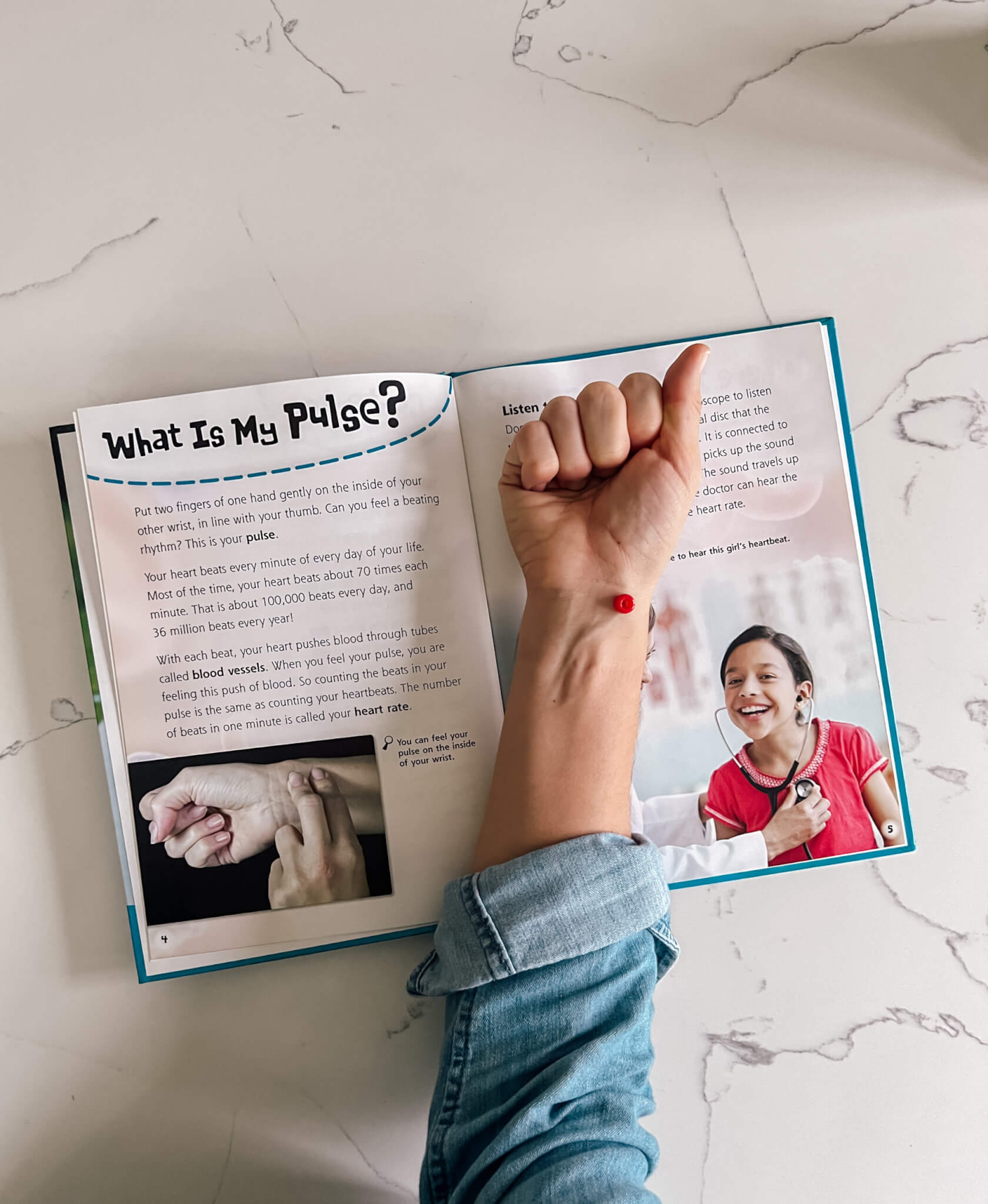
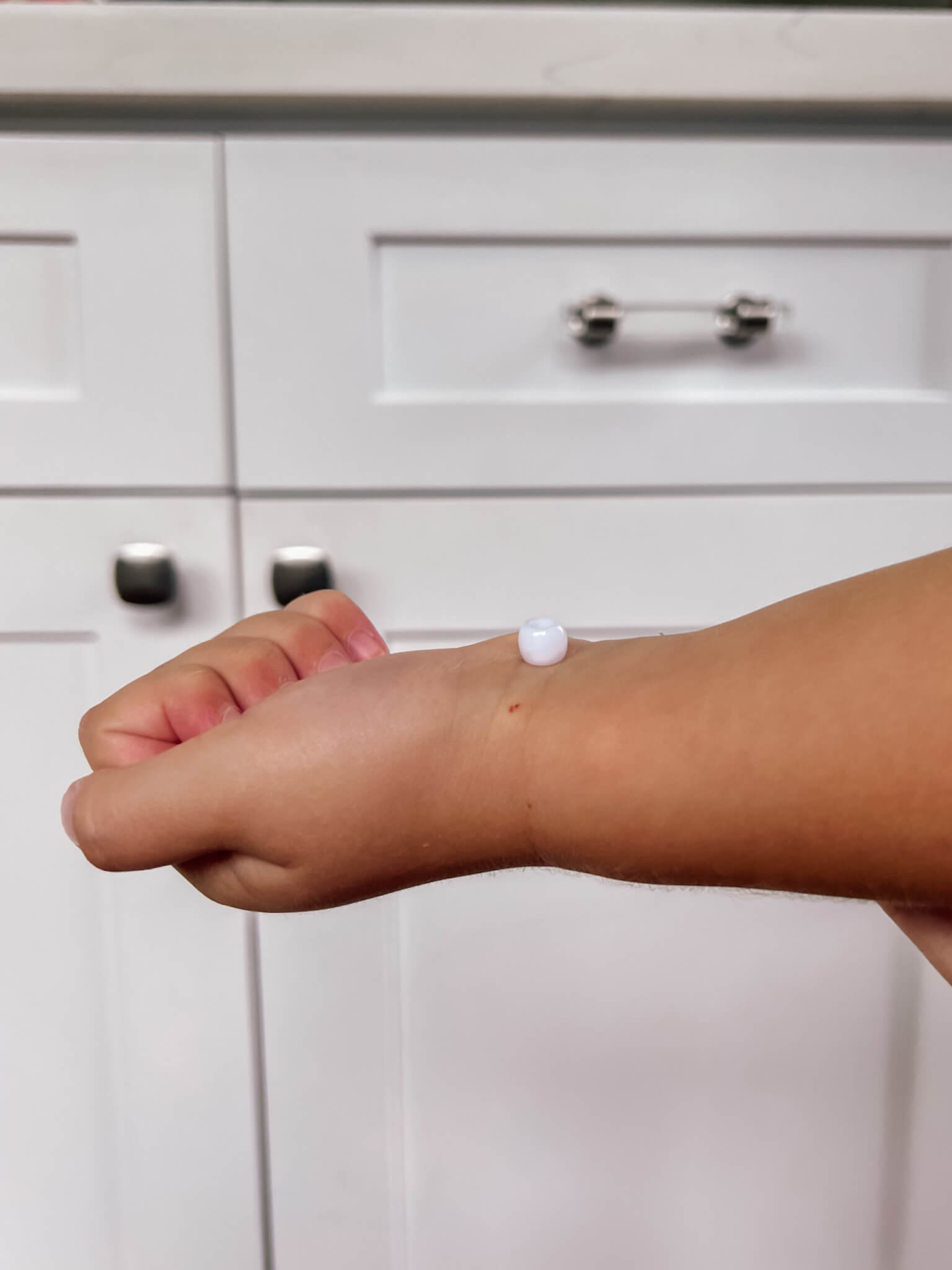
After “seeing” our pulses, I had the kids stand up and move to our activity mat. We discussed physical activity and exercise as it relates to our heart beating and pulse. They (correctly) hypothesized that the heart beats faster when we are active. Then we tested out their hypothesis. We did 20 jumping jacks (mostly just jumping up and down), then took note of the fact that we felt we were breathing a little harder and faster. I don’t know if it hit home, but I tried to explain that when we move around more, our body has to do more work, and our heart has to beat faster to pump our blood through our body at the rate it needs to keep up with our activity. It was a good break and “get out the wiggles” moment if nothing else (though I do think they absorbed some).
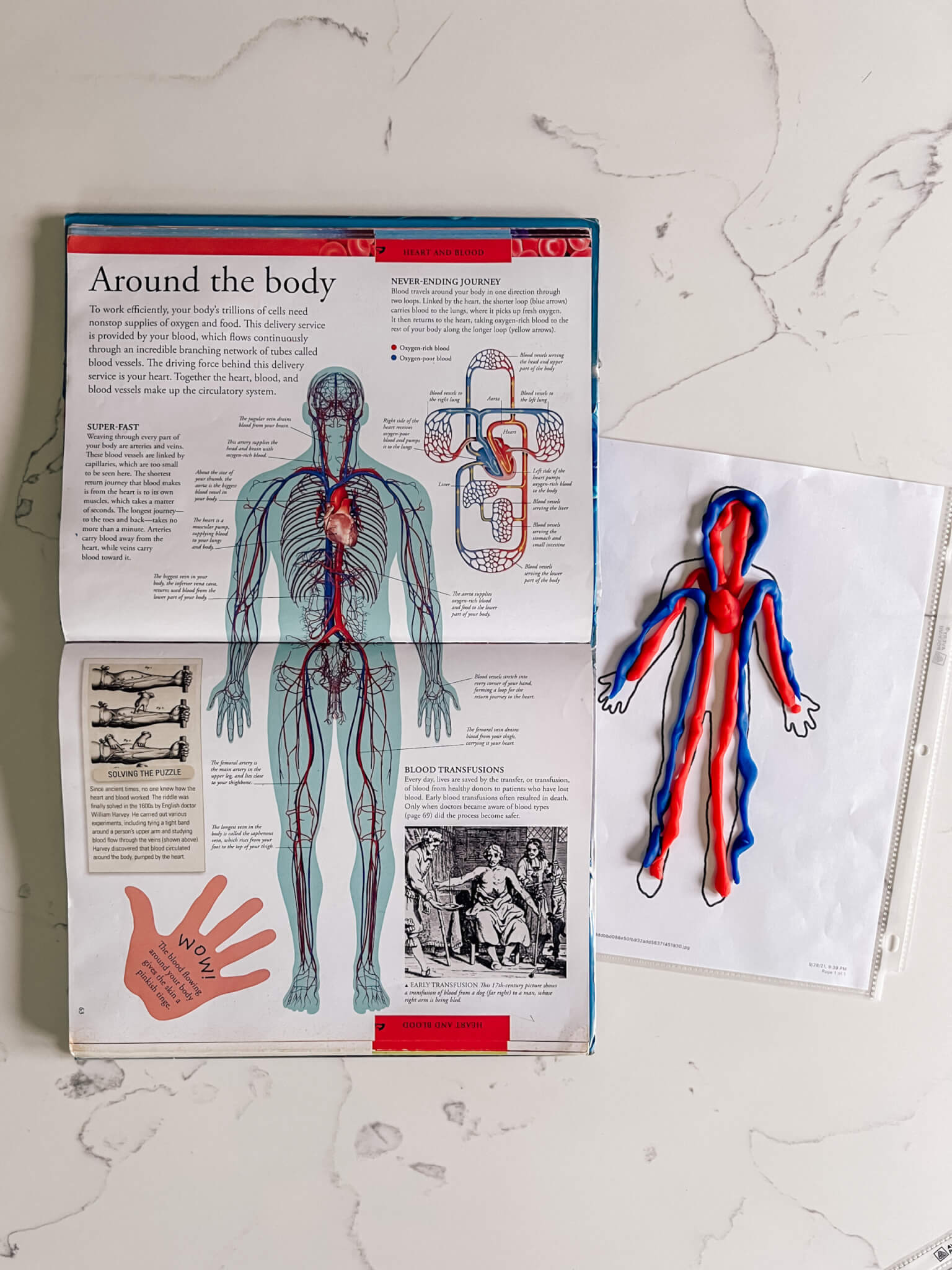
Corresponding book: I pretty briefly referenced the book, “What is Your Pulse?” for this section because it just wasn’t the best use of time to go through more in our group setting. But I still wanted to mention this book here because, even though it’s old and possibly hard to find (we borrowed it from our library), it has a lot of good information broken down into appropriate questions on each pair of pages.
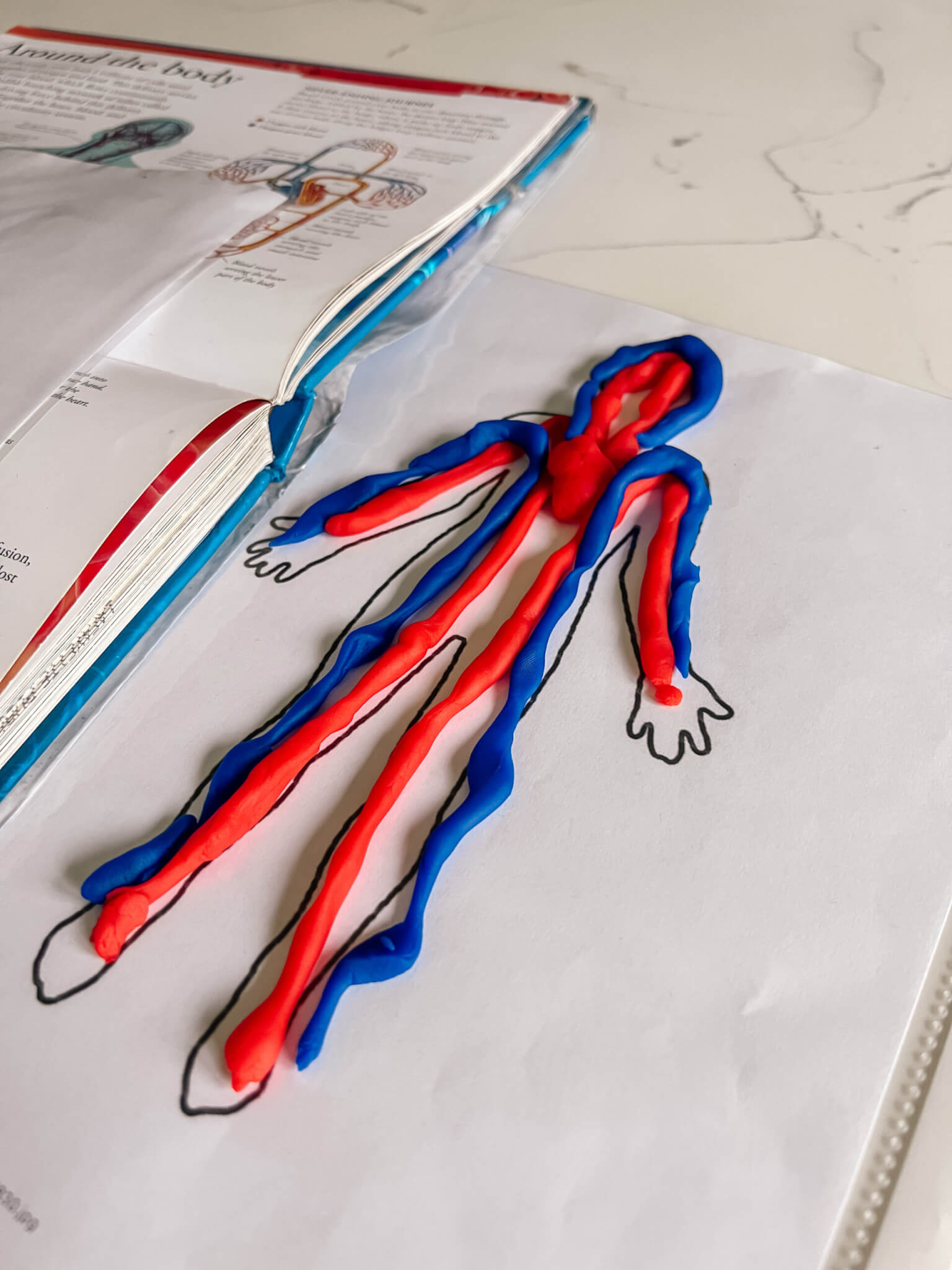
Well, now having written all that out, you can confirm that I get wordy. I hope that if you got this far, it’s been a help, though. You can also checkout my Amazon list (photo of some things below) with educational resources for learning about the heart and circulatory system as well as my Homeschooling Pinterest board (with a section for the same).
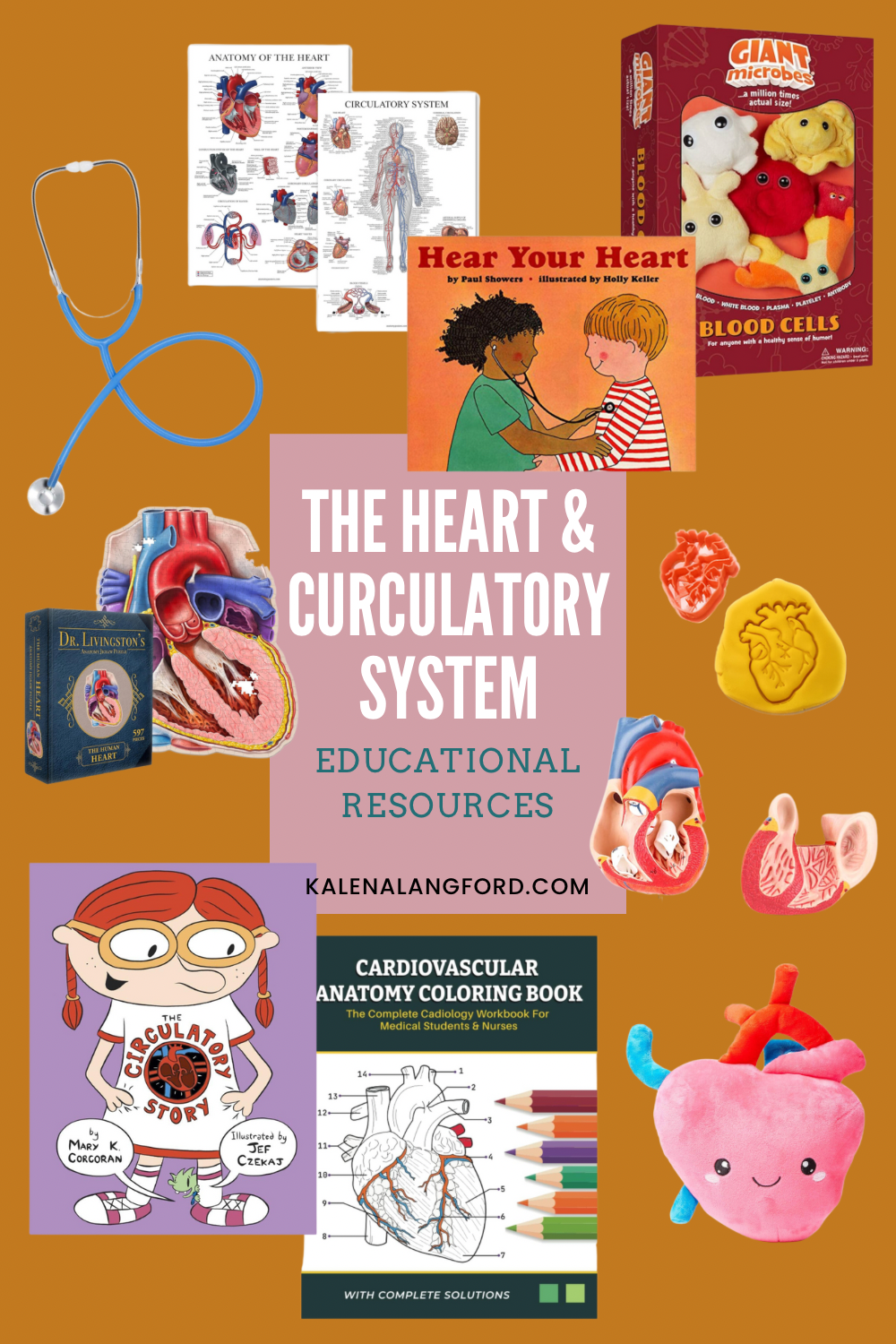
If you happen to use any of this or just want to show me some of your homeschool resources and lessons, I’d love for you to tag me on Instagram—@thelangfordhouse. I’m hoping and working on sharing more of our homeschool journey here and there.
We grazed on snack-y foods in the living room (something we never do) for dinner while watching A Charlie Brown Christmas this evening. The kiddos liked it a lot (especially that little girl sneaking her way into this picture…she kept serving us food ❤️).
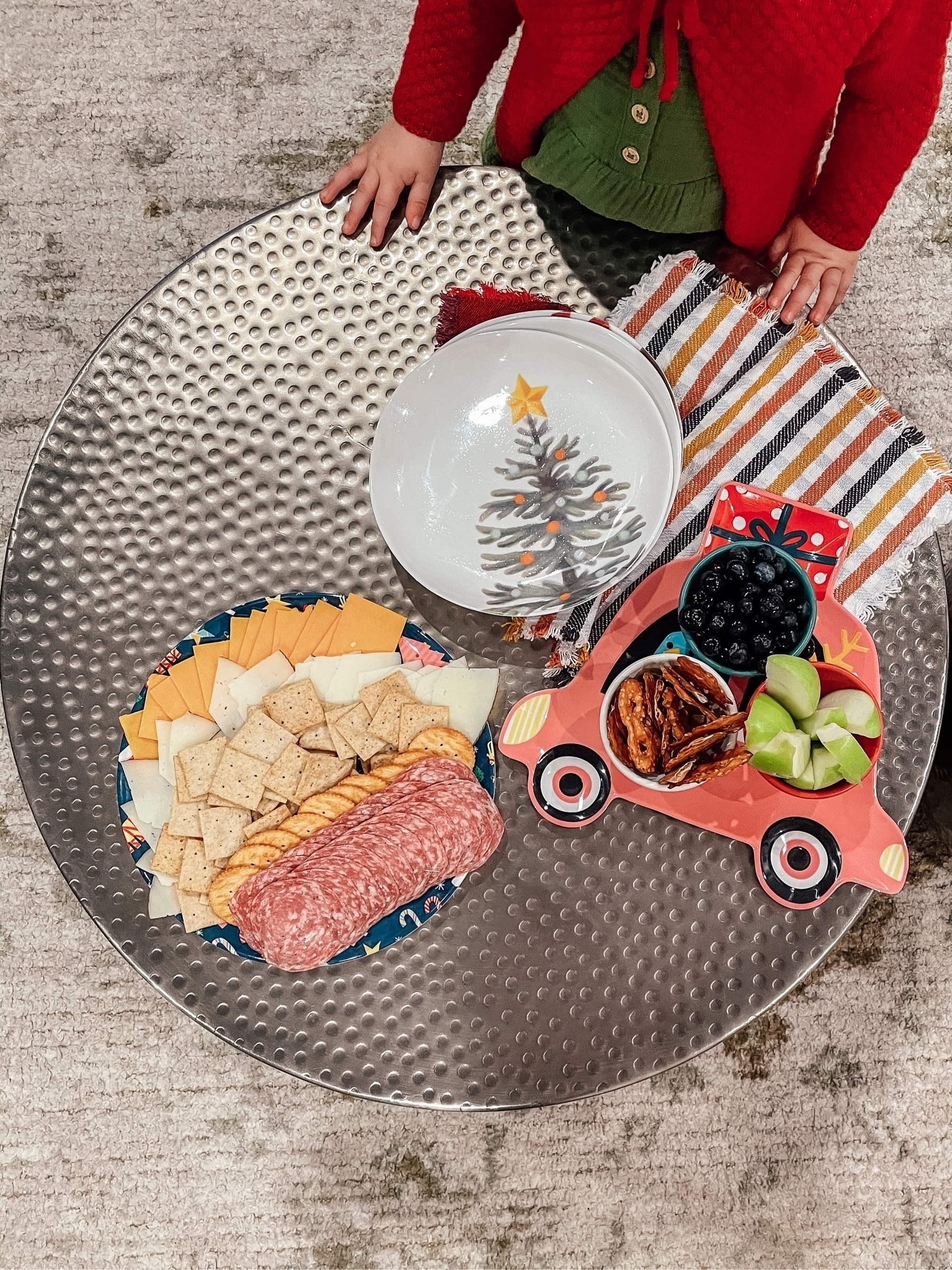
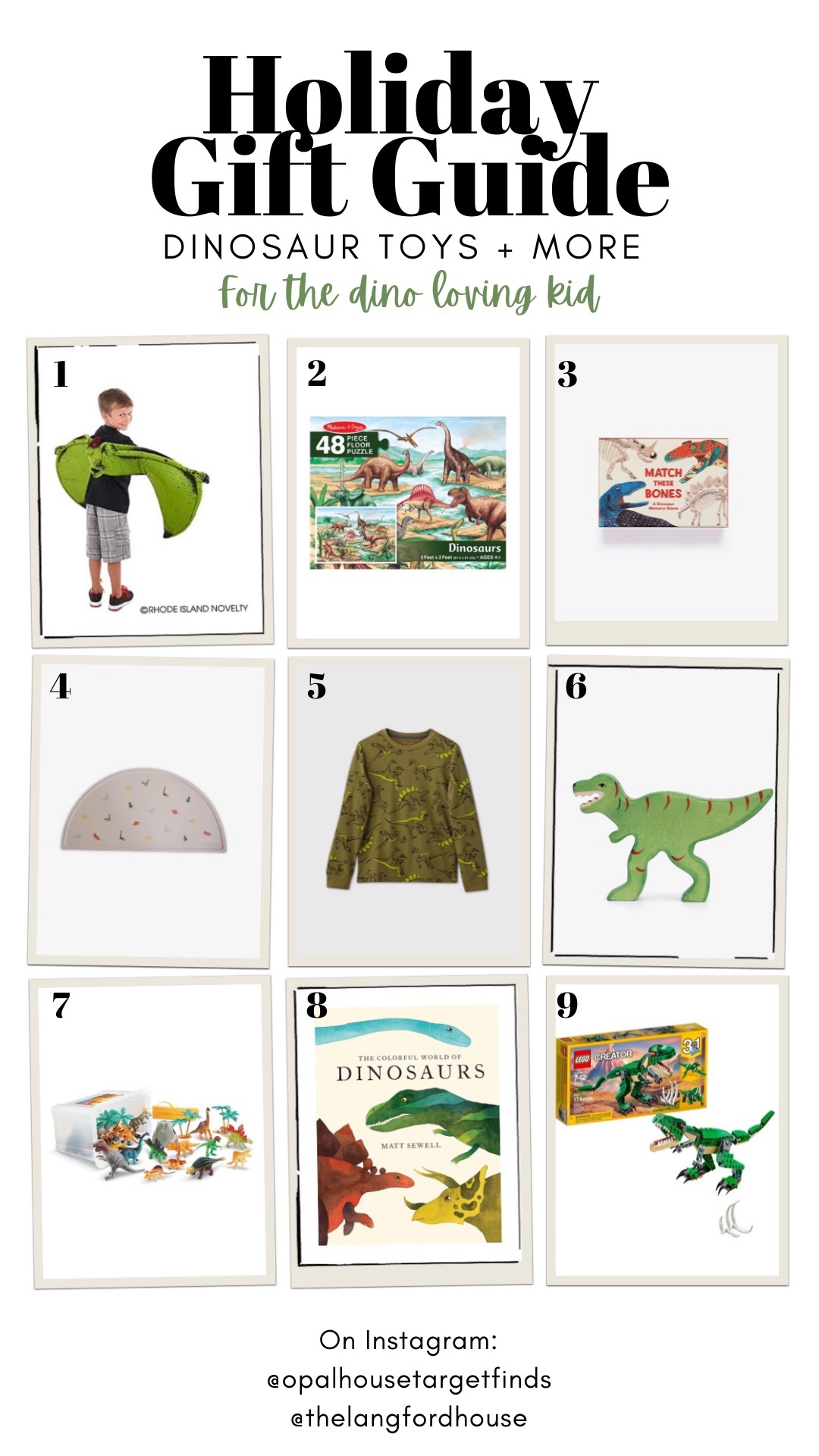
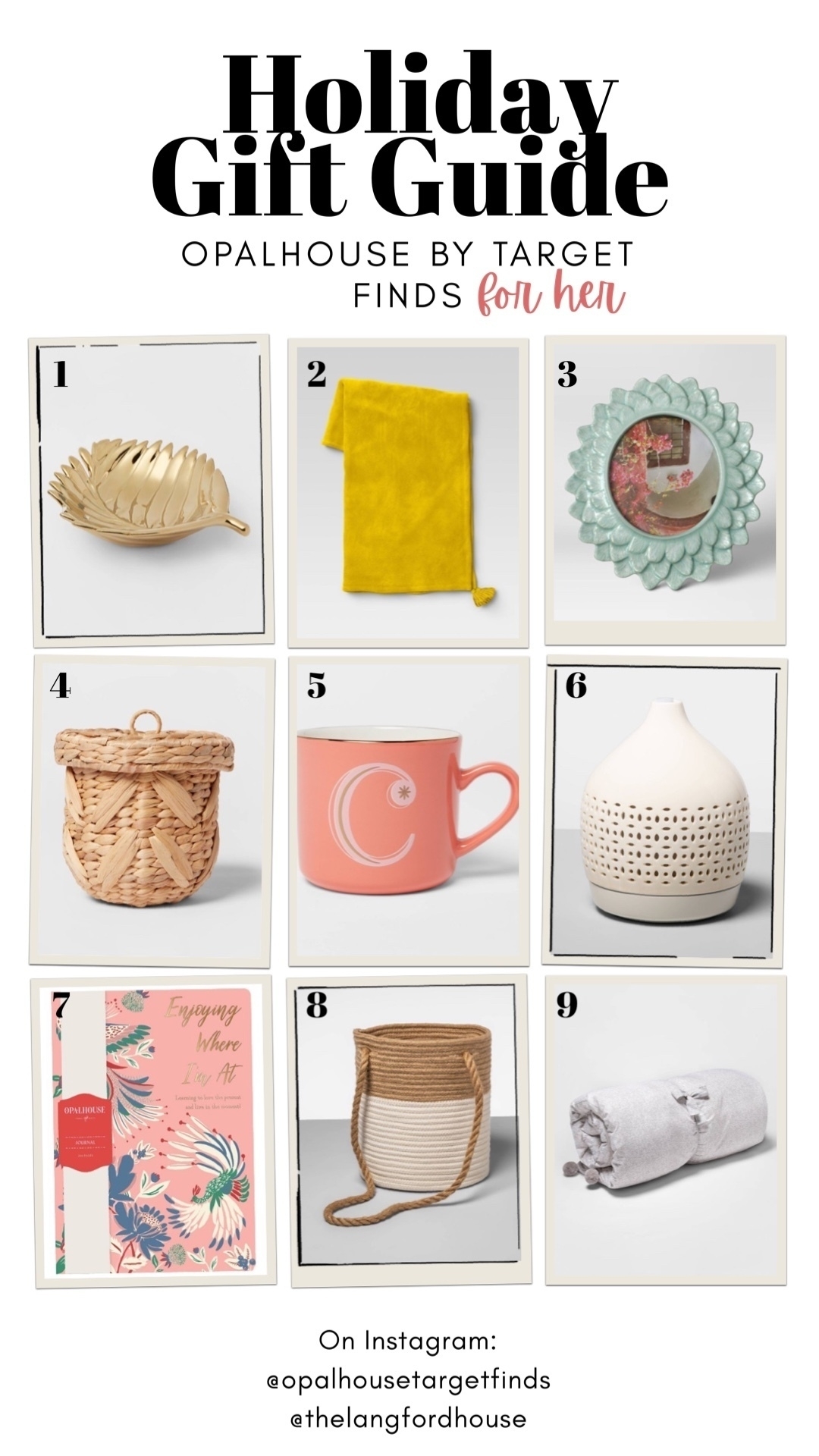
Heads up: Creating gift guides might be my new favorite thing. So, they’ll be incoming over the next couple of weeks (assuming I finish more than the one I’m posting today 🤗)!
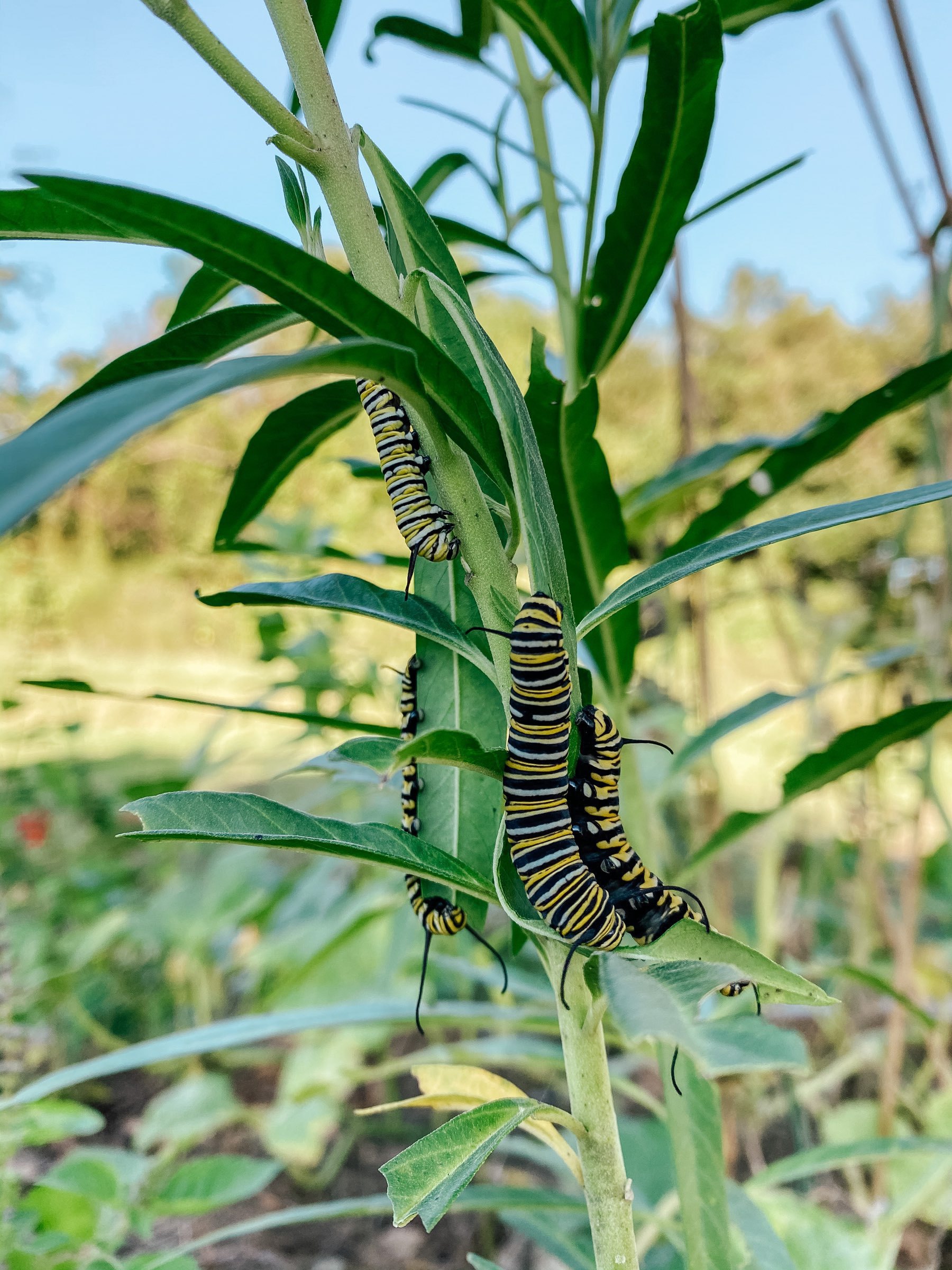
Haven’t gone to the garden in several days. Walked out to it today and found 10 monarch caterpillars.
Honestly, pretty proud of my Magnatile plane